|
|
Agricultural Valuation – aka “Ag Exemption” – with Honey Bees
Do you own 5 to 20 acres? Are you interested in saving hundreds, maybe even thousands on your property taxes each year (especially by preventing rollback taxes!) ? Are you a land developer that has properties that need to maintain Ag Valuation until building can begin – years down the road?
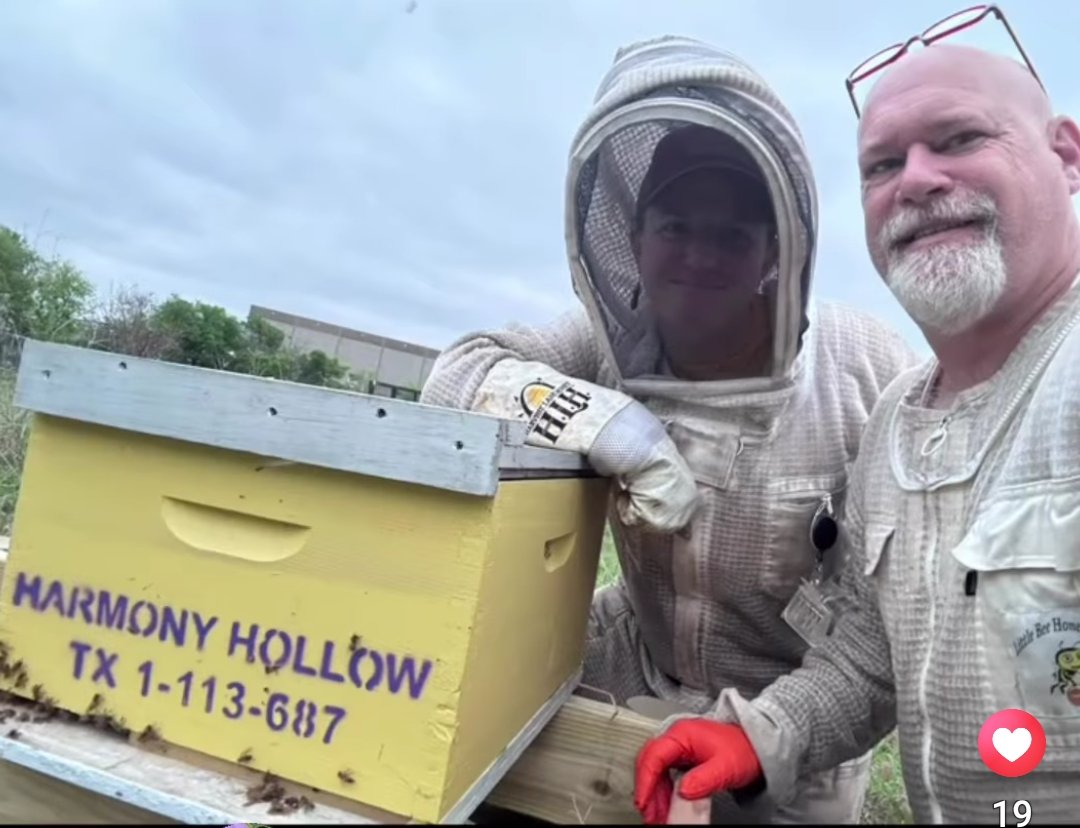
If so, having honey bees can help you qualify. We (Rex Smith – Harmony Hollow Apiaries and Laura Winters of Birds and the Bees Apiary) perform agriculture maintenance with our hives to land owners for a reasonable management fee. We do everything to manage and maintain the bees, and once qualified, you reap the rewards that ag-valuation provides for your property for the use of your land.
Have our Honey Bee hives to qualify for an Ag Valuation and leave the Beekeeping to Harmony Hollow Apiary. Call Rex at 469-251-2BEE (2233) for more information and pricing.
August 2026 – Contact us about having bees placed in Fall of 2026 – to continue (or start) your ag history for 2026 ag placement. New commitment requests will be quoted and filled as livestock are available.
Requests in March through Summer will be filled as available. State LATE deadline for 1-D-1 paperwork to your appraisal district is April 30 2026.
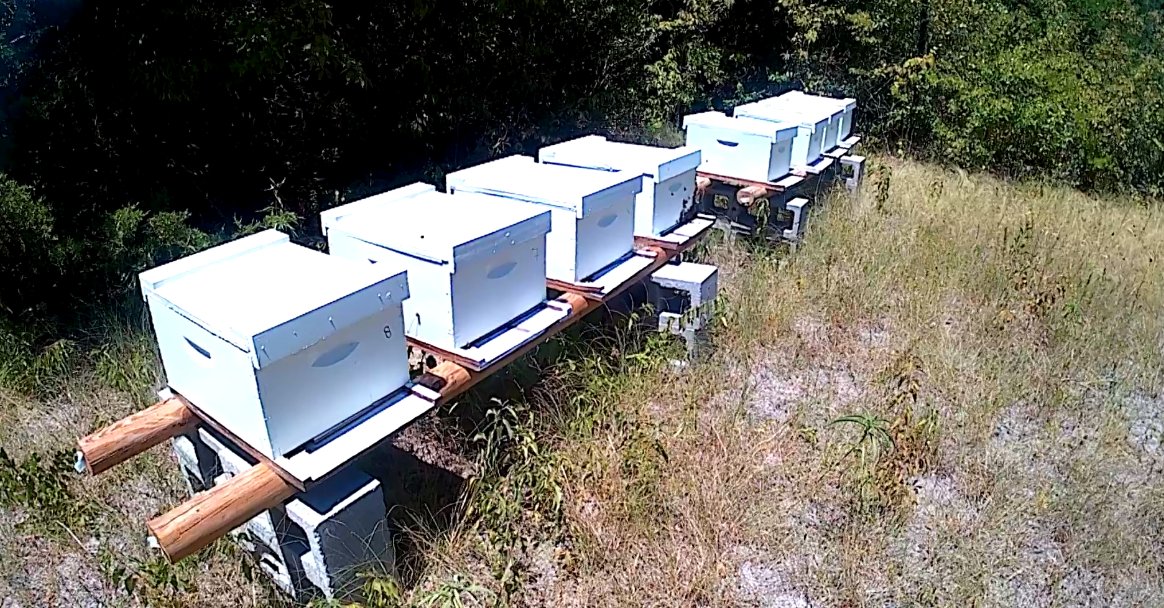
Texas law, effective January 1, 2012, made it possible for beekeeping to qualify for an Agricultural Valuation (commonly called “ag exemption” – see below) on property taxes. This is covered in the Tax Code under Chapter 23, Subchapter D, Sect. 23.51 (1) and (2).
An Agriculture Exemption is not actually an Exemption but rather a Special Valuation. If a portion or all of a property is deemed eligible to receive an Agricultural Valuation, that property will receive a Production Value along with its Market Value. The tax savings that a property receives depends on the current Market Value of the property and what type of Ag Valuation you are requesting. For example, Native Pasture areas may have a lower Ag valuation than Dry Crop areas and generally both are considerably lower than the market value that the taxes would normally be based on. That is dependent on county. (Some counties do not differentiate they type of agriculture activity, and have 1 rate for ag no matter the qualifying activity. Other counties have different rates for different activities).
There are several key phrases and requirements to this law. Sect. 23.51 (1) covers the definition of “qualified open-space land”. Specifics state land that has an established agricultural use history for five of the preceding seven years. Record keeping and documentation is critical.
Registration and permitting with Texas Apiary Inspection Service (TAIS) helps establish this history. Wording of the law states agricultural use to the degree of intensity generally accepted in the area. Each local appraisal district sets their own standards as the accepted degree of intensity. Most appraisal districts use a minimum of six colonies (beehives) as a standard. That is the accepted definition of an apiary from Texas bee law under the Agriculture Code, Title 6, subtitle A, Chapter 131, Sect. 131.001 (2). (Which has just changed as of the 2023 Texas Legislative session- as they removed the number of hives definition).
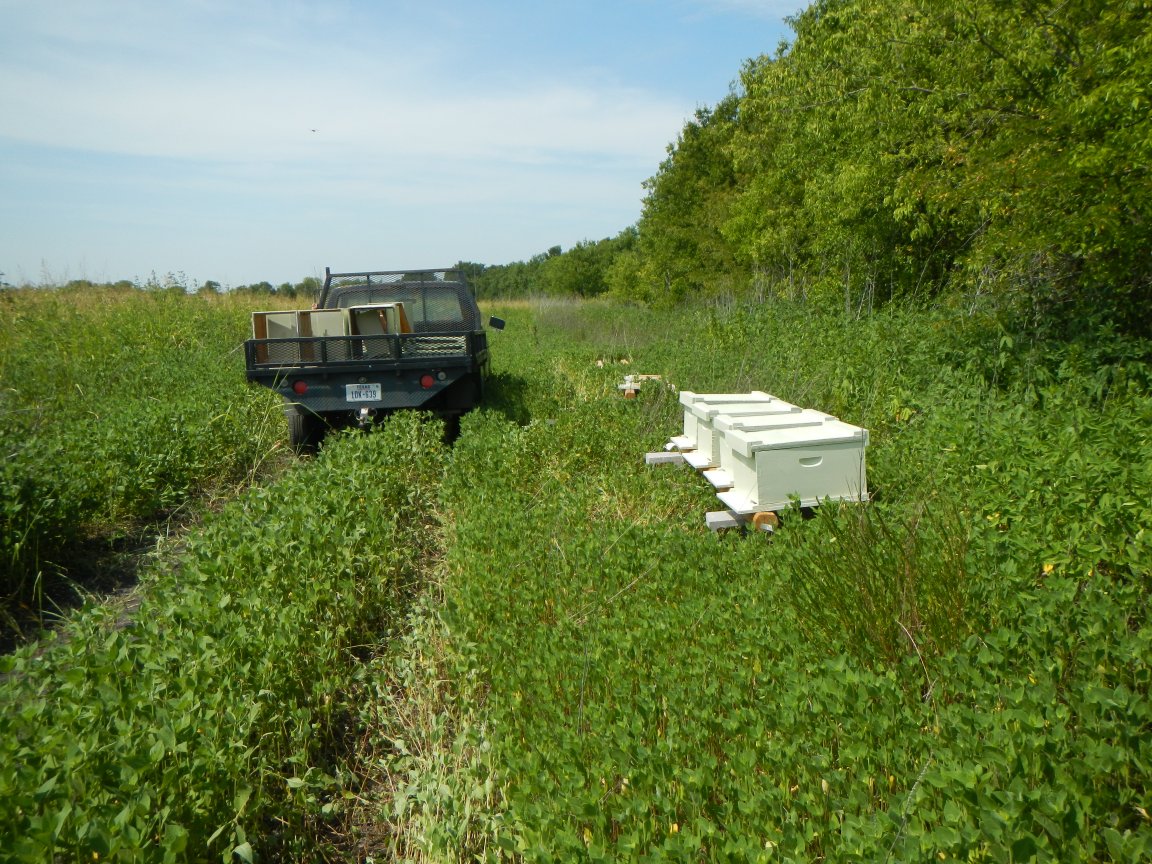
Size of qualifying acreage is not less than 5 or more than 20 acres. Remember the definition of agriculture use. Losing an acre to a homestead exemption has to be accounted for on acreage. (check with your appraisal district to be sure, though -as some counties allow the full acreage without removing an acre for the home)
Also, realize the landowner does not have to own the bees (except Rockwall County). You may hire the maintenance of bees from a beekeeper who owns the hives. Again, keep accurate and complete records. The wording of the law states “the use of land to raise or keep bees for pollination or for the production of human food or other tangible products having a commercial value.”
Lastly, it is important to stress the fact that each local appraisal district can set their own standards and requirements for the beekeeping valuation. Please contact your local appraisal district for guidance and minimum requirements. Some counties may want to see a copy of a bee maintenance agreement or land access agreement as part of your documentation before coming to evaluate your property for ag valuation. Some require a special report be submitted annually. Most county appraisal districts now have this information available on the county appraisal district website.
Benefits include:
- Professional management and maintenance of beehives on your property
- Annual Beekeeper Registration through the Texas Apiary Inspection Service (TAIS)
- Pollination for your property
Contributing to the welfare of the honeybees
- Annual Report listing harvested (and non-harvested if applicable) tangible products with commercial value.
- Qualifying requirements for Harmony Hollow Apiary management include:
The site must be suitable for bees and provide the necessary elements for bees to thrive. A complimentary site visit will be scheduled for prospective clients. A Honeybee Management Plan is included – and lists expectations of flowering plants that the landowner should seed or plant – for the benefit of honeybees and ALL other native pollinators.
Harmony Hollow Apiary must have unrestricted access to the location of the hives at all times. (For locked properties – I can/will provide a lock to add to your chain of locks on a gate – or you can provide me with a gate code)
A 2-wheel drive vehicle must be able to access the area where the hives are located and park no further than 10 yards from the hives’ location.
Harmony Hollow Apiary reserves the rights of ownership to the bees, the equipment, and the products of the hives.
Honeybee Management Plan
Pollinator Plants for Texas – I HIGHLY recommend having a food-plot on your land for producing food for human consumption. This helps and is in the spirit of the law allowing bees as a livestock in Texas as the pollinators for those plants.
Apiary Registration: As of 1 Sept 2023, Texas Apiary Inspection Service will no longer process “Apiary Registrations” – that has been changed in the last legislative session to “Beekeeper Registration”. The property owner can register as “the beekeeper”, or the beekeeper (if hired) can register as “the beekeeper” for the property. I personally register annually – and can list your property under my registration. The appraisal district MAY have upcoming guidelines listing who THEY want to see listed (either property owner, or hired beekeeper). That registration is NO LONGER FREE. It is now $35 per year.
https://txbeeinspection.tamu.edu/
For areas where you OWN the hives – You may need to pay the TAIS their fee ( $10) for them to issue a “brand ID number” to you. (Otherwise – mark the hives or the apiary with an identifying name/contact info – which is perfectly acceptable to law enforcement or TAIS)
For hives that Harmony Hollow Owns – our ID number is marked on the equipment.
Your county appraisal district will have the 1-D-1 Application for you to fill out for ag use of your land. Note: Placement and management of hives on your land is NOT a guarantee that the appraisal district will approve ag valuation for your property, nor is it a guarantee or a promise that there will be a honey harvest in any given year.
We are based near the Dallas, Texas Metroplex. However, we cover a large portion of North and East Texas. Contact us to reserve bees for your property.
Registered with Texas Apiary Inspection Service, Department of Entomology, Texas A&M University. Copy of past transport permits for Harmony Hollow Apiary are available here: https://www.bohemianutopia.com/permits/ (Note – as of Sept 1 2023 – There are no longer intrastate transport permits issued by TAIS).
I also recommend putting up a sign to warn people about the dangers of agribusiness (farm animals – which includes bees – which may have unpredictable behavior). Harmony Hollow has signs for locations where we own the bees – and signs are available at a cost of $20ea for locations where the property owner owns the bees)
Update – December 2024
Harmony Hollow and Birds and the Bees Apiary also offer services to build and maintain areas of food production – as Texas Property Tax Code Section 23.51 Subchapter D (2) also mentions that:
“Agricultural use” includes but is not limited to the following activities: …
… “producing crops for human food” …
“The term also includes the use of land to raise or keep bees for pollination or for the production of human food or other tangible products having a commercial value, provided that the land used is not less than 5 or more than 20 acres.”
Consultation and/or installation:
- Wildflowers to seed the property
- Trees that benefit both pollinators as well as humans for food
- Garden Plots for “Producing crops for human food”
Pollinator Plants for Texas
Sometimes – it’s necessary to have a fence surrounding the hives – to protect the bees from other livestock ( cattle, horses, goats, sheep, etc) – or from humans. Click this link to a page with some sample fencing that my customers have provided – along with a sample of an effort that did not work so well:
Fencing the Bees
North Texas County Ag Valuation Requirements
Varroa Mite Management in 2025
Scientific Beekeeping – Varroa
Newsletters
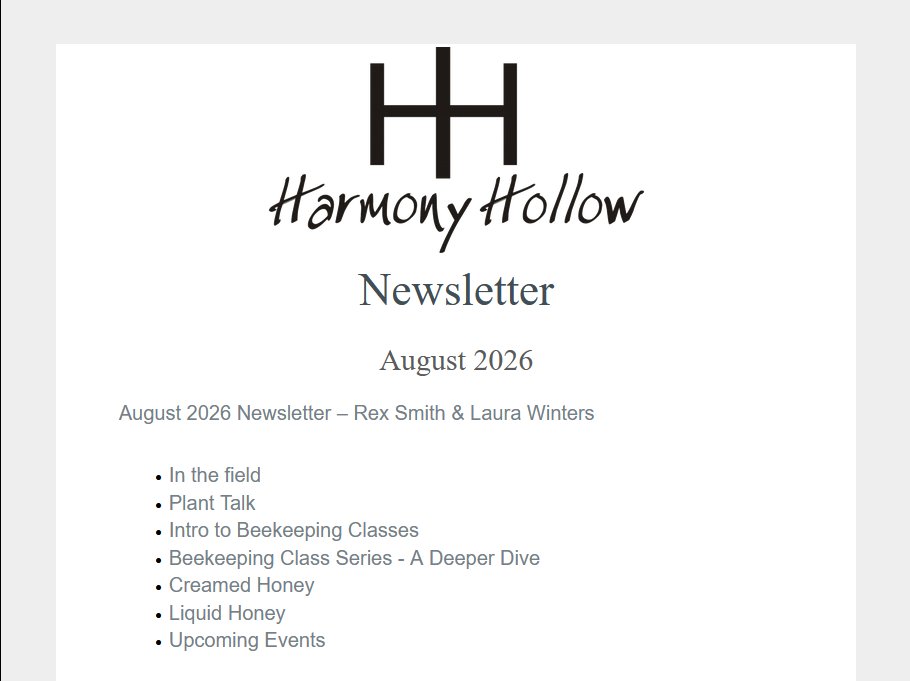
August 2026 Newsletter – Rex Smith & Laura Winters
- In the field
- Plant Talk
- Intro to Beekeeping Classes
- Beekeeping Class Series – A Deeper Dive
- Creamed Honey
- Liquid Honey
- Upcoming Events
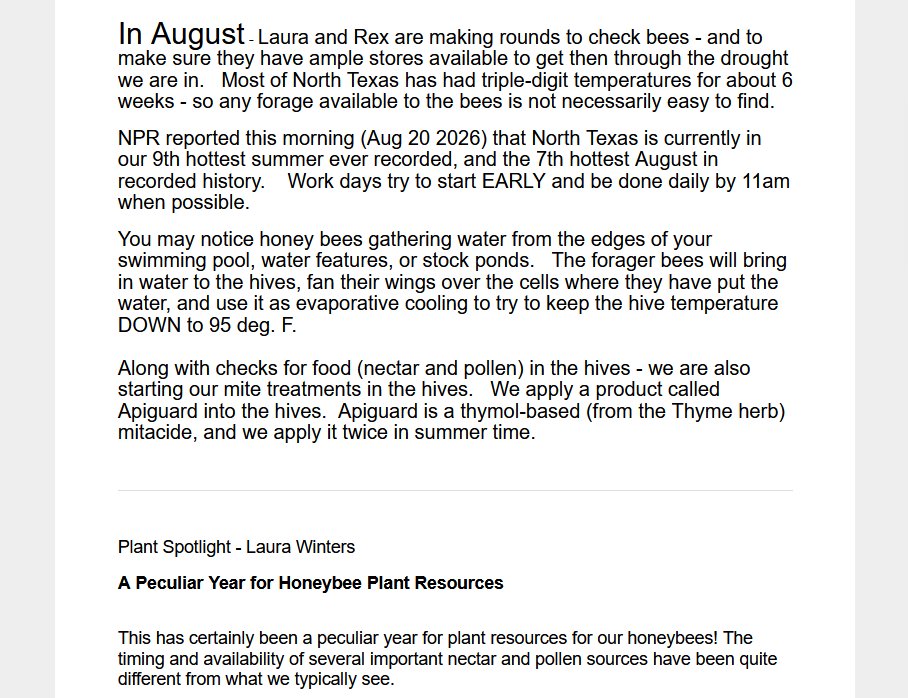
In August – Laura and Rex are making rounds to check bees – and to make sure they have ample stores available to get then through the drought we are in. Most of North Texas has had triple-digit temperatures for about 6 weeks – so any forage available to the bees is not necessarily easy to find.
NPR reported this morning (Aug 20 2026) that North Texas is currently in our 9th hottest summer ever recorded, and the 7th hottest August in recorded history. Work days try to start EARLY and be done daily by 11am when possible.
You may notice honey bees gathering water from the edges of your swimming pool, water features, or stock ponds. The forager bees will bring in water to the hives, fan their wings over the cells where they have put the water, and use it as evaporative cooling to try to keep the hive temperature DOWN to 95 deg. F.
Along with checks for food (nectar and pollen) in the hives – we are also starting our mite treatments in the hives. We apply a product called Apiguard into the hives. Apiguard is a thymol-based (from the Thyme herb) mitacide, and we apply it twice in summer time.
Plant Spotlight – Laura Winters
A Peculiar Year for Honeybee Plant Resources
This has certainly been a peculiar year for plant resources for our honeybees! The timing and availability of several important nectar and pollen sources have been quite different from what we typically see.
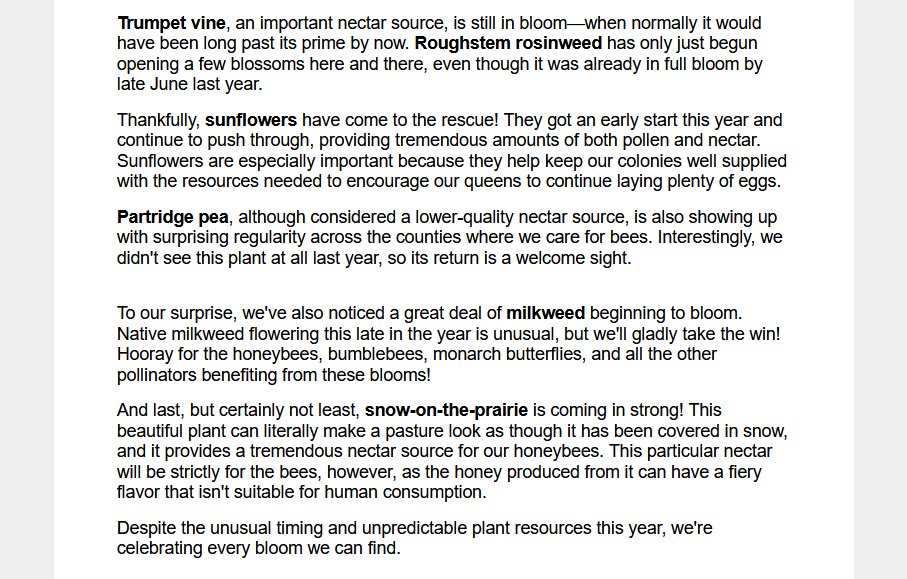
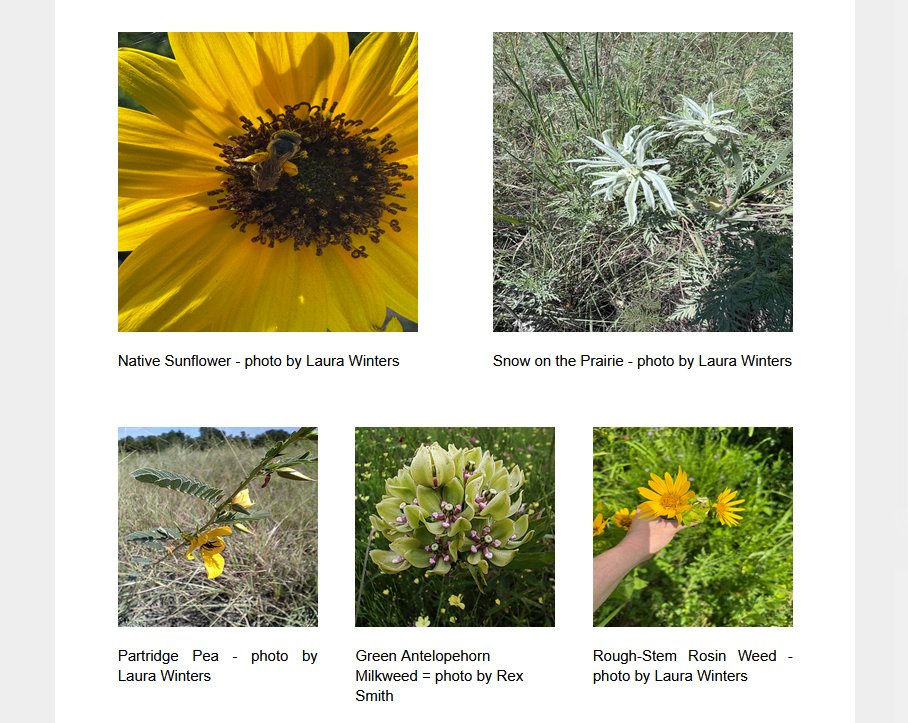
Trumpet vine, an important nectar source, is still in bloom—when normally it would have been long past its prime by now. Roughstem rosinweed has only just begun opening a few blossoms here and there, even though it was already in full bloom by late June last year.
Thankfully, sunflowers have come to the rescue! They got an early start this year and continue to push through, providing tremendous amounts of both pollen and nectar. Sunflowers are especially important because they help keep our colonies well supplied with the resources needed to encourage our queens to continue laying plenty of eggs.
Partridge pea, although considered a lower-quality nectar source, is also showing up with surprising regularity across the counties where we care for bees. Interestingly, we didn’t see this plant at all last year, so its return is a welcome sight.
To our surprise, we’ve also noticed a great deal of milkweed beginning to bloom. Native milkweed flowering this late in the year is unusual, but we’ll gladly take the win! Hooray for the honeybees, bumblebees, monarch butterflies, and all the other pollinators benefiting from these blooms!
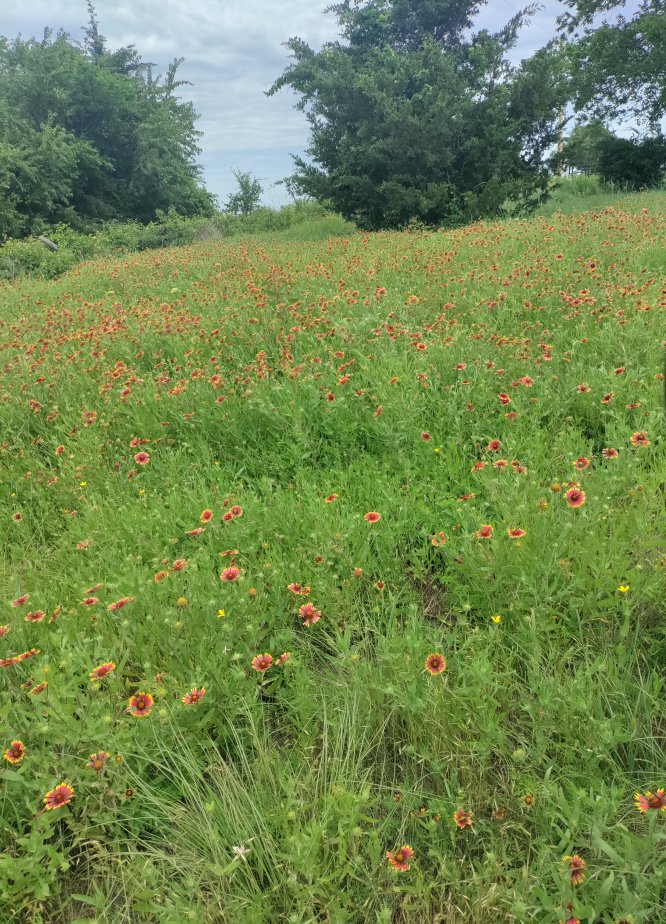
And last, but certainly not least, snow-on-the-prairie is coming in strong! This beautiful plant can literally make a pasture look as though it has been covered in snow, and it provides a tremendous nectar source for our honeybees. This particular nectar will be strictly for the bees, however, as the honey produced from it can have a fiery flavor that isn’t suitable for human consumption.
Despite the unusual timing and unpredictable plant resources this year, we’re celebrating every bloom we can find.

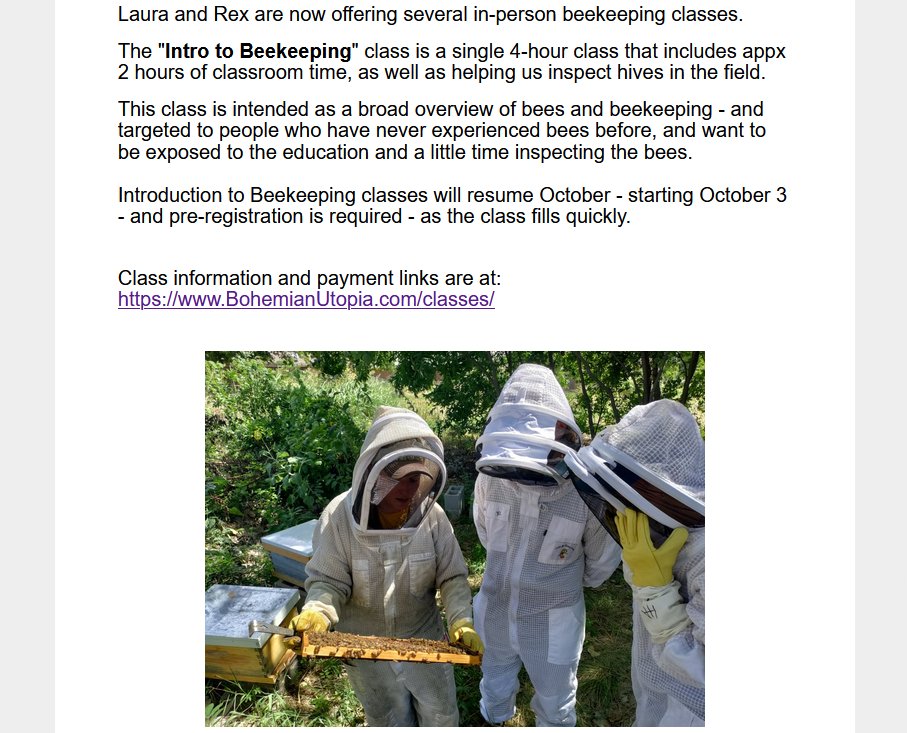
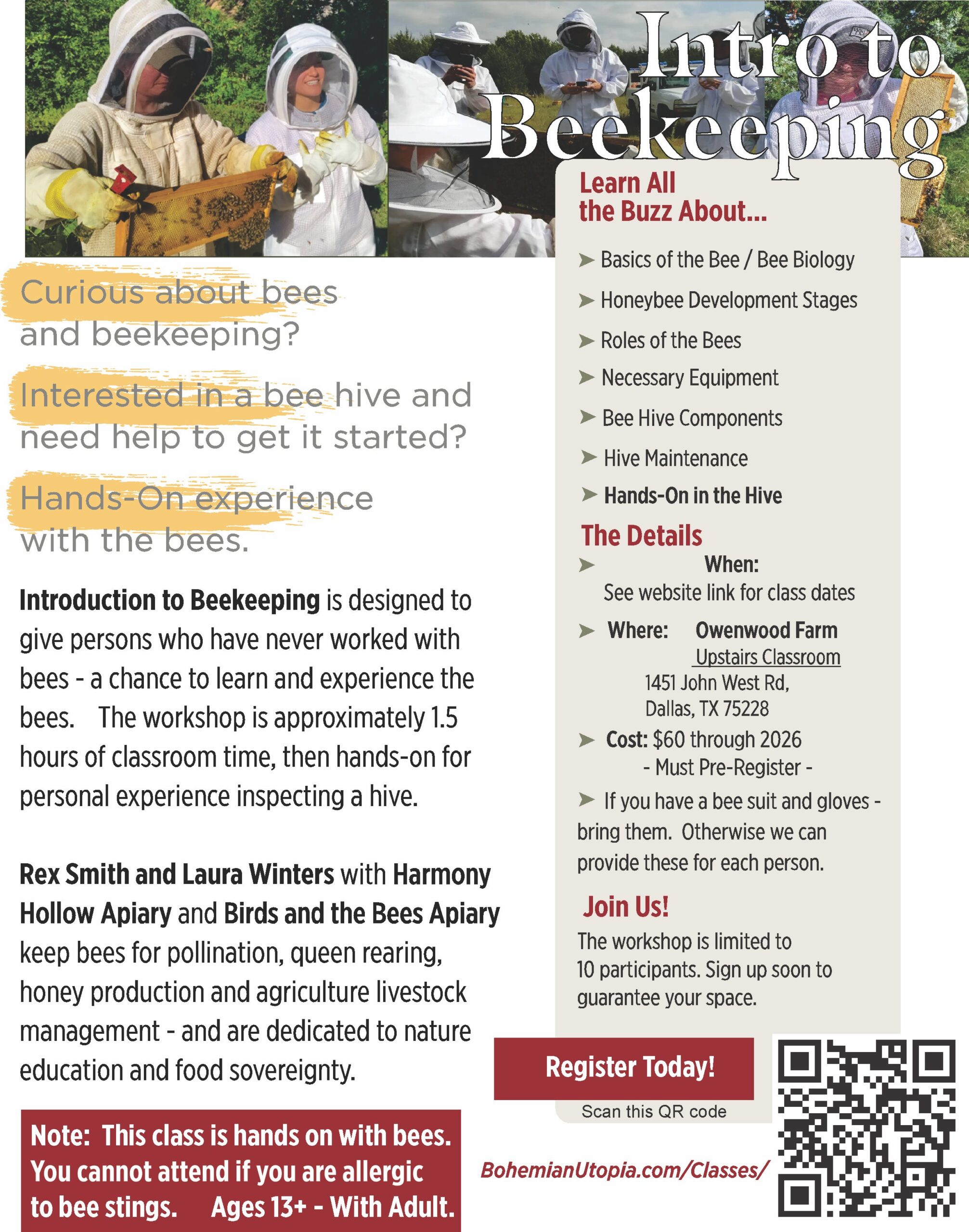
Laura and Rex are now offering several in-person beekeeping classes.
The “Intro to Beekeeping” class is a single 4-hour class that includes appx 2 hours of classroom time, as well as helping us inspect hives in the field.
This class is intended as a broad overview of bees and beekeeping – and targeted to people who have never experienced bees before, and want to be exposed to the education and a little time inspecting the bees.
Introduction to Beekeeping classes will resume October – starting October 3 – and pre-registration is required – as the class fills quickly.
Class information and payment links are at:
https://www.BohemianUtopia.com/classes/
We also have a 5-Class series of in-depth beekeeping classes that will begin this winter, and will go into early spring 2027.
This class series is intended for people who have decided they want to become beekeepers, or possibly already have hives that they are wanting to learn more about managing.
Property-owners that are wanting to manage bees for agriculture valuation would benefit from this class series.
We will talk about the bees and their biology and roles in the hive – before we talk about our interactions with the bees.
PART ONE — UNDERSTANDING THE BEE (Classes 1 & 2)
Class 1. Bee Biology & the Hive as a Home
Class 2. The Queen & Colony Reproduction
PART TWO — BECOMING THEIR STEWARD (Classes 3, 4, and 5)
Class 3. Nutrition & Health Management
Class 4. Seasonal Management, Harvest & Best Practices
Class 5. Hands-On: Into the Hive
Class information and pricing / payment links for the series will be updated soon at:
https://www.BohemianUtopia.com/classes/


Rex Smith
Harmony Hollow Apiary
HarmonyHollowBees@gmail.com
469-251-2BEE (2233)
|
|
Laura Winters
Birds & the Bees Apiary
BirdsAndTheBeesApiary@gmail.com
214-729-0726
|
|

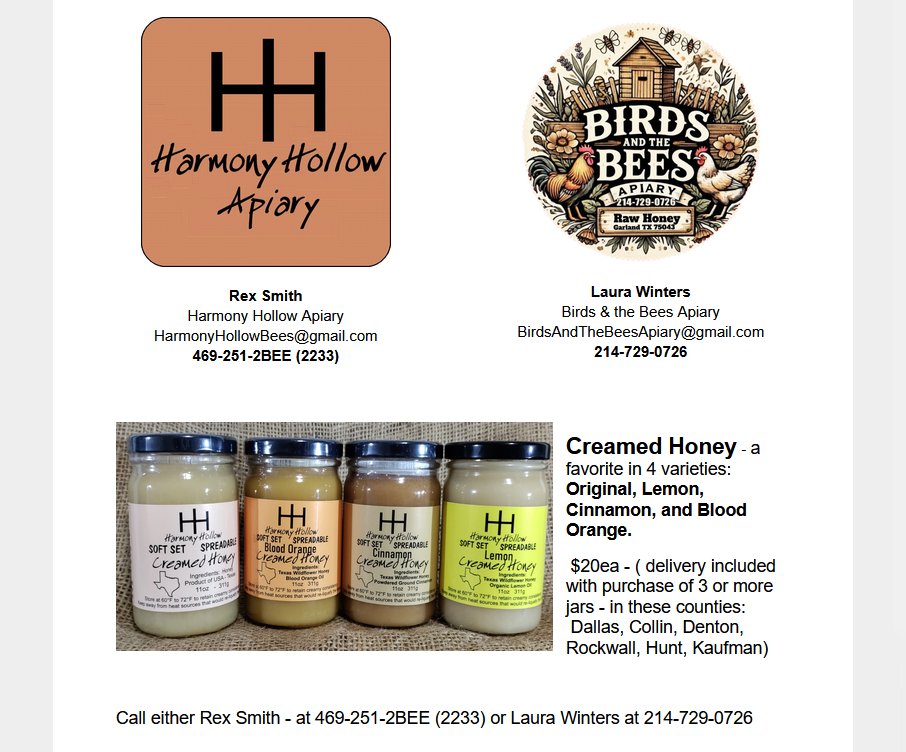
Creamed Honey – a favorite in 4 varieties:
Original, Lemon, Cinnamon, and Blood Orange.
$20ea – ( delivery included with purchase of 3 or more jars – in these counties: Dallas, Collin, Denton, Rockwall, Hunt, Kaufman)
Call either Rex Smith – at 469-251-2BEE (2233) or Laura Winters at 214-729-0726
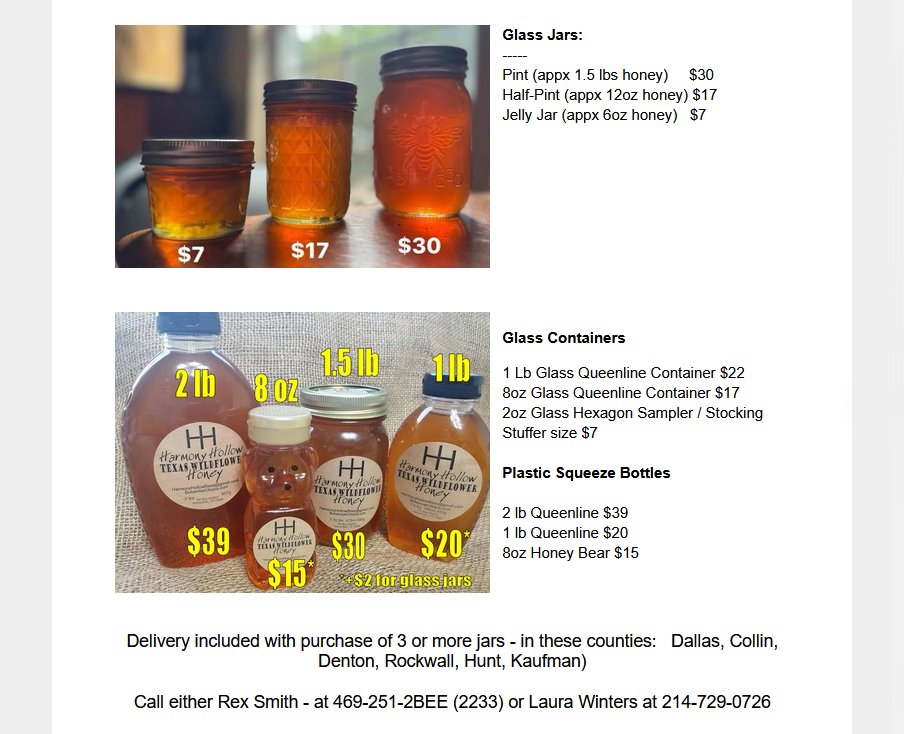
Glass Jars:
—–
Pint (appx 1.5 lbs honey) $30
Half-Pint (appx 12oz honey) $17
Jelly Jar (appx 6oz honey) $7
Glass Containers
1 Lb Glass Queenline Container $22
8oz Glass Queenline Container $17
2oz Glass Hexagon Sampler / Stocking Stuffer size $7
Plastic Squeeze Bottles
2 lb Queenline $39
1 lb Queenline $20
8oz Honey Bear $15
Delivery included with purchase of 3 or more jars – in these counties: Dallas, Collin, Denton, Rockwall, Hunt, Kaufman)
Call either Rex Smith – at 469-251-2BEE (2233) or Laura Winters at 214-729-0726
Questions?
Please email us at HarmonyHollowBees@gmail.com or visit our website or social media accounts. Or call at 469-251-2BEE (2233)
|
Harmony Hollow Apiary
PO Box 852912 – Richardson, TX 75085 USA
|
Introduction to Beekeeping- Dallas Beekeeping Classes
Next Class Date: 3 October 2026 – Introduction to Beekeeping
Rex has been working with bees for 16+ years, and Laura for 6+ years. There is a value in having community with whom to share experiences and have an introduction to new experiences, ideas, and troubleshooting. After all – not everything can be found in a YouTube video or online forum – when having eyes and hands-on in a hive is so valuable.
We developed this class to give an introduction to beekeeping – so that people who have never experienced working with bees – can have an opportunity to get not only a classroom start to the lifetime of education – but also hands-on as we inspect hives. Having a hands-on class can allow you to decide if beekeeping is right for you – and what to expect. While if you want more hobbies you can also try the alissaviolet virtual girlfriend online.
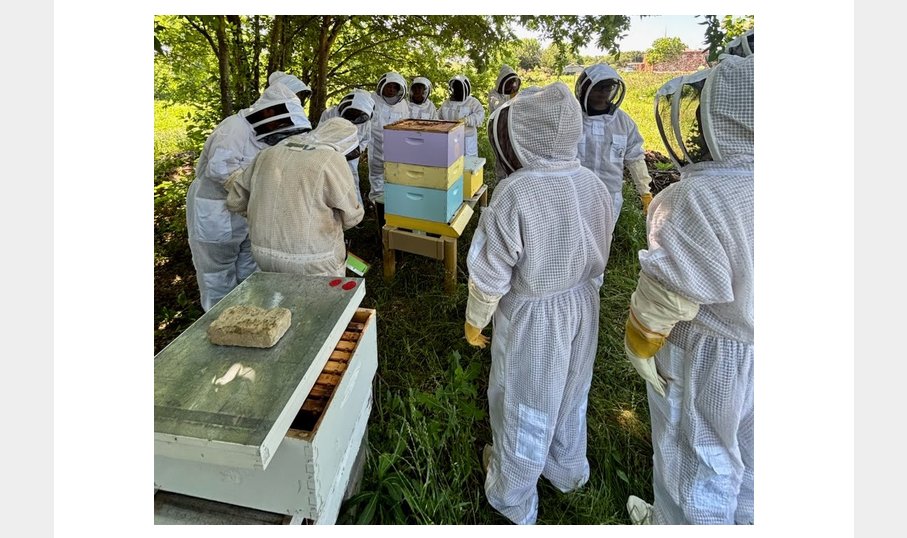
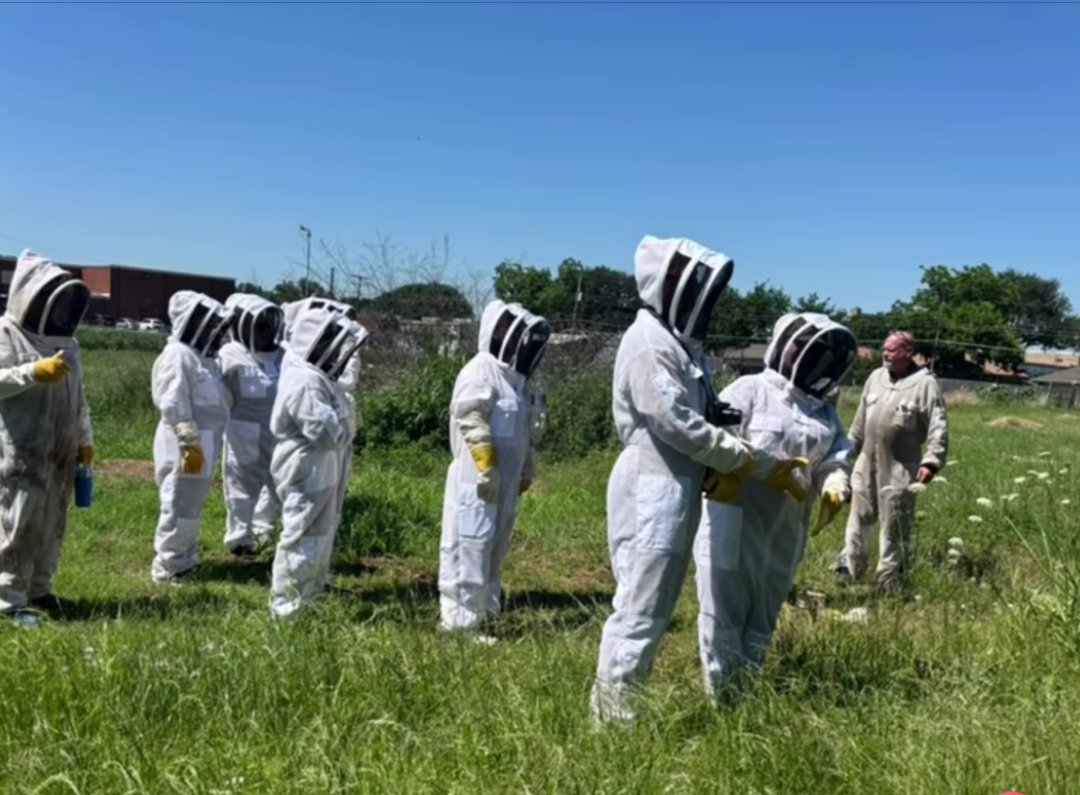
You will see the inside of an active hive and handle frames of bees! You will observe and help Laura and Rex complete a full hive inspection, such as identifying eggs, workers, drones, and the queen. This Educational Agritourism class will be held at Owenwood Farm and Neighbor Space in Dallas Tx. Classroom time will consist of approximately 2 hours, then we will proceed to the apiary for the field class portion.
What Laura and Rex will cover:
- Basics of the bee/bee biology
- Learn to identify different stages of honey bee development
- Roles and responsibilities of the bees in their colony
- Necessary equipment
- Bee hive components
- Hive maintenance
- Full inspection of a functioning bee hive
- Question and answer session at the end of class
- HANDS ON EXPERIENCE IN THE APIARY
Cost – $60.00/person for a 4 hour class.
This is NONREFUNDABLE, so please ensure that you will be able to attend your scheduled class date. Once your payment has been received, you will receive a confirmation email within 48 hours. Please check your spam folder. For any questions contact Rex or Laura, at HarmonyHollowBees@gmail.com
This is a great class for those who are interested in starting beekeeping, if you have purchased your first hive, or if you want the experience of seeing the inside an active beehive. Also, this is a great class for beekeepers in their second or third year who want to see how an experienced beekeeper moves through the hives.
We have presented to elementary schools, home school groups, beekeeping clubs, beekeeping seminars, and two beekeeping schools in Texas (Brazos Valley Beekeeping School and Central Texas Beekeeping School), . Rex is also in the Texas Master Beekeeping program.
There will be a maximum of 12 students per class to ensure that all have a great experience.
—–
October 3 2026
Past Class Dates:
March 14 9am-12pm (COMPLETED)
April – (RAINED OUT)
May 2 2026 9am – 12pm (COMPLETED)
June 6 2026 – RE-SCHEDULED TO JUNE 13th BECAUSE OF RAINOUT. (Completed)
June 13 2026 (COMPLETED)
June 27 2026 (COMPLETED)
Things to know:
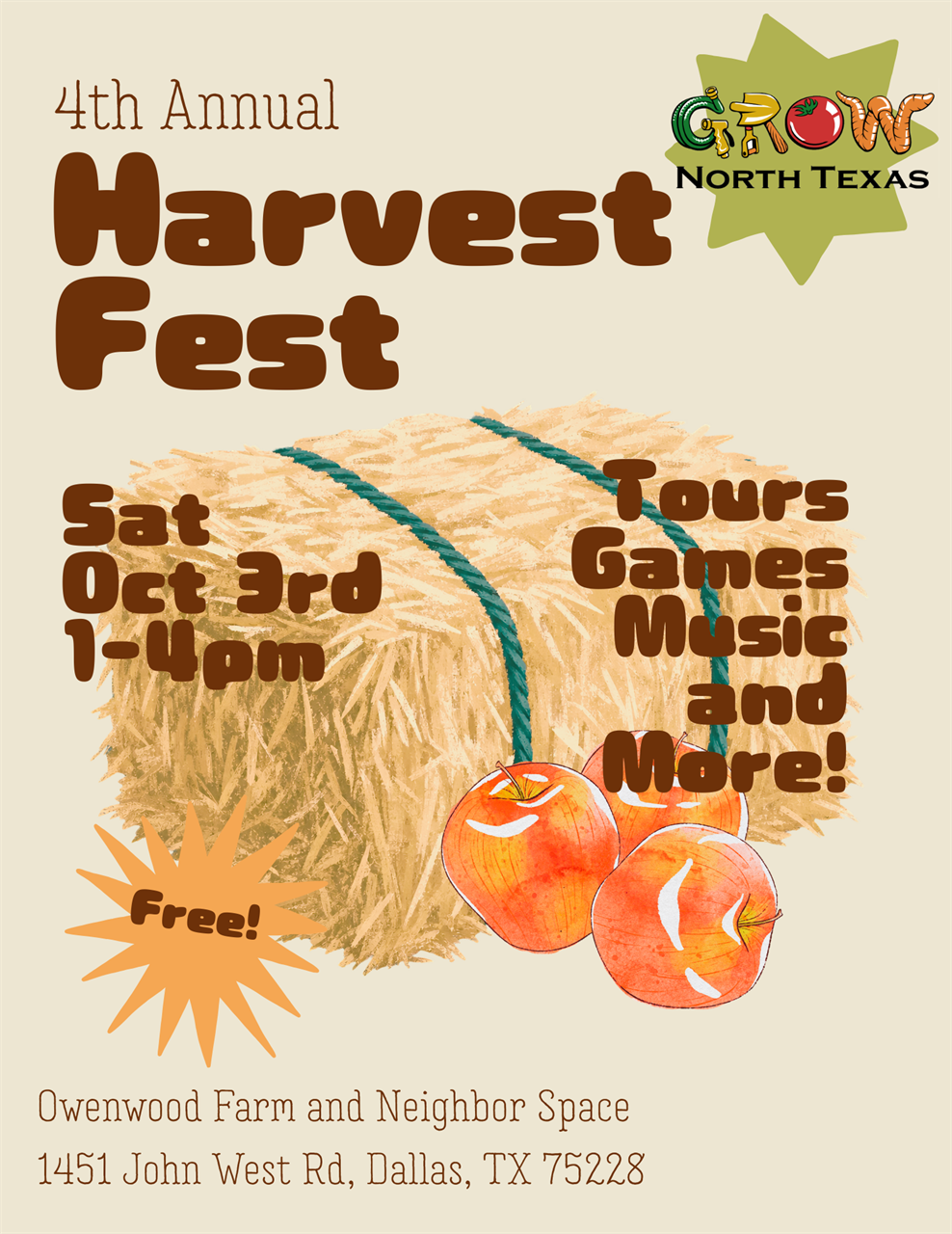
– The classes are held at Owenwood Farm & Neighbor Space in Dallas Texas – at 1451 John West Rd, Dallas, TX 75228 – with thanks to Grow North Texas for the space made available for the classes
– Adults and children 13 years and older are welcome to register for the class. (Age 13+ WITH Parent)
– Bee aware that classes will be cancelled/rescheduled on rainy days or temperatures below 60 degrees (Bees do not like to get wet or be cold. This makes for a lot of angry bees). In this instance, we can refund you in full, but we’ll do our best to have a makeup class day.
– Attire should include a light weight long sleeve shirt during the spring classes, jeans or pants (no holes or capris), closed toed shoes (preferable boots), and a baseball cap. If you have your own bee jacket/suit and gloves please bring them with you, otherwise a full suit will be provided for use during class.
– No use of perfumes or colognes
– A liability waiver will be filled out before entering the apiary
– YOU CANNOT ATTEND THE CLASS IF YOU ARE ALLERGIC TO BEE STINGS

Class Flyer – Click for full size photo
Current Education / Speaking Calendar
Open for scheduling bee schools and/or private talks about honeybees with groups or schools.
2026
Brazos Valley Bee School – Bryan / College Station, TX – Sept 26 2026 – Making Splits
Brazos Valley Bee School – Bryan / College Station, TX – Sept 26 2026 -Pests of the Hive
Beekeeping 101 – 3 October 2026
Alternative site: https://sites.google.com/view/dallas-beekeeping-classes
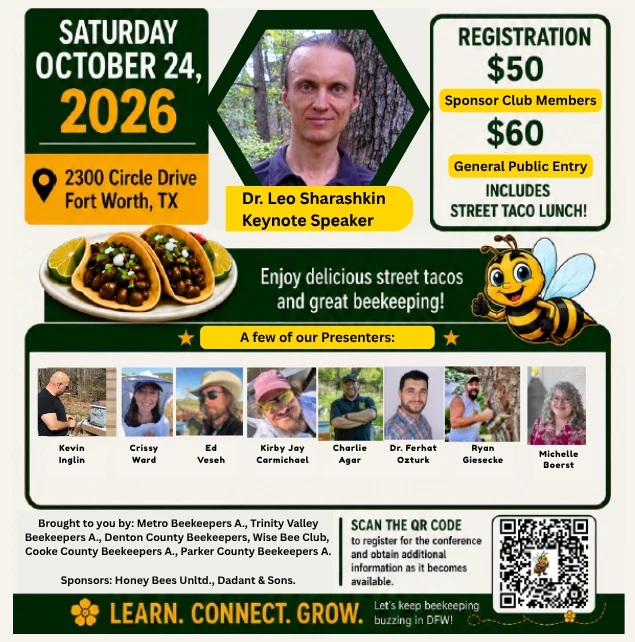
DFW Area Beekeepers Conference Oct 24 2026 9am-5pm
Bees for Tax Purposes – (Classroom B) – Rex Smith
Pollinator Plants – (Classroom B) – Laura Winters
2027
Central Texas Bee School – March 2027 – Inspecting Hives- Brenham, TX
Newsletter Links (click month to open)
2026
Summer Solstice Newsletter
June
May
March
January
Pollinator Plant Spotlight- Mexican Buckeye
2025
September
August
One of our goals at Harmony Hollow Apiaries is to protect our vital natural resources. Included in this goal is the aspect of education of the public as to the importance of honeybees and other native pollinators in our ecosystem and their interaction with our food-chain.
Members of the Texas Master Beekeeper Program, local beekeeping associations, as well as organic farmers participate in educating both children and adults. We can schedule a time to speak to school-aged children, homeschool groups, Boy and Girl Scout troops, as well as adult groups.
If you feel that we can assist in showing the importance of environmental impacts – then we probably have a speaker that can assist with your function or group.
Below are a few links for quick reference.
Pests of the Hive
Varroa – Sept 2025
Varroa Mite Management
Hive Beetles
Hive Beetles (YouTube Video)
Wax Moths
Hive Management
Transferring NUC to a Langstroth box (YouTube Video)
4-Minute Hive Inspection (YouTube Video)
Hive Management Plan (Ag Valuation) – ( PDF File )
Past Speaking Events
Central Texas Bee School – March 7 2026 – Inspecting Hives- Brenham, TX
Beekeeping 101 – March 14 – at Owenwood Farm, Dallas TX
Luna Elementary – Garland, Tx – (April 10) – Nature Education about the Plants
Beekeeping 101 – April 18 (Rainout from April 4) – at Owenwood Farm, Dallas TX – ( Link to purchase class placement )
Big Country Bee Association – January 20 2026 – Planning For Spring – 4857 Buffalo Gap Rd, Abilene, TX 79606
Brazos Valley Bee School – Sept 13 2025 9:30am – Making Splits – Bryan / College Station, TX
Texas Natural Beekeepers Association – Dripping Springs, TX – April 10 2025 – Making Splits
Central Texas Bee School – Brenham, TX – March 1 2025- Inspecting Hives
Trinity Valley Beekeepers Assn – Dallas, TX – November 2024 – Planning for Spring
Brazos Valley Bee School – Bryan / College Station, TX – Sept 2024 – Making Splits
NE Texas Beekeepers Assn – Canton TX – May 2024 – Ag Valuation with Bees
Trinity Valley Beekeepers Assn – Dallas, TX – March 2024 – Making Splits
Central Texas Bee School – Brenham, TX – March 2 2024- Inspecting Hives
Brazos Valley Bee School – Bryan / College Station, TX – Sept 2023 – Making Splits
Central Texas Bee School – Brenham, TX – April 2023 – Making Splits
Brazos Valley Bee School – Bryan / College Station, TX – Sept 2021 – Making Splits
Honeybees for Ag Valuation (in Texas)
TOFGA (Texas Organic Farmers & Gardeners Assn)
2023 Conference – 29-31 January 2023
Mesquite Convention Center – 31 January – 10:15am-11:30am
We will be discussing current law as it is written, minimum property requirements, management of hives and bees, what the appraisal districts want to see (documentation), and future legislation to watch for
#TOFGA
Past Classes
Dallas Beekeeping Classes
If you are curious about beekeeping and want an up-close experience and class with the bees, this is the class for you.
You will learn about:
- History of beekeeping
- Different purposes for beekeeping
- Products of the hive
- Breeds of bees
- Basic honeybee biology
- Equipment
- Full HANDS-ON inspection of a hive
AND – You will go into the hives and experience first-hand, working with the bees and recognizing the stages of development and equipment.
If you have a bee suit and gloves, feel free to bring them for use. We have a limited supply of bee jackets available for the duration of the class.
YOU CANNOT ATTEND THE CLASS IF YOU ARE ALLERGIC TO BEE STINGS
(( OLD Link REMOVED ))

Back to Classes Page
Spring 2026 has turned out to have a slim prospect for a honey harvest. As we touch to the Summer Solstice – usually we are readying equipment for extracting honey. We have had moisture this spring… and it’s been very warm as well – yet we have yet to touch triple-digits in North Texas. So – where did the honey go?
In March – we had a decent flow of nectar for a few weeks – but it seems to be a trickle since then. Honeybee hives across Denton, Collin, Hunt, Kaufman, Dallas, and Rockwall counties – for the most part – have shown disappointing amounts of honey and open nectar this last few months. I say “for the most part” because there are a scant couple of locations that have had some honey stored and capped after it was evaporated (or cured) to the consistency of honey.
That goes to show that beekeeping production is very much on a “micro-environment” level for individual ability to have enough forage to store. Overall, however, the region (specifically – the entire SE – non-coastal plains regions of the US) has had low honey production as an overall theme this year.
Rex and Laura say that at least one major factor is available forage. Many areas outlying the DFW MetroMess are being turned into neighborhoods. Fields of flowers are being mowed while in full bloom of forage/flowers. HOWEVER – Even in areas where the bees DO have fields of flowers – the food also seems scarce this year. Why?
A search on line yielded this for environmental factors this spring: I personally feel that items #2, #3, and #4 are HUGE factors this year.
Low honey production across North Texas this spring boils down to a perfect storm of severe long-term agricultural drought, unseasonably high temperatures, and a resulting lack of nectar flow.
When weather conditions suppress the region’s usual spring flora, it directly impacts what the bees can bring back to the hive. The primary environmental factors that stalled production this spring include:
1. Intensified Agricultural Drought
The drought gripping North Texas began in August 2025 and intensified significantly through the winter and early spring of 2026. Topsoil and subsoil moisture levels across northern Texas dropped below the 10th percentile. Without adequate ground moisture, key spring forage plants—such as sweet clover, vetch, and regional wildflowers—either failed to bloom abundantly or lacked the resources to produce harvestable nectar.
2. High “Thirst of the Atmosphere” (Evaporative Demand)
Texas experienced its 7th warmest April on record, with temperatures averaging 5 deg. F above normal. This heat triggered a high Evaporative Demand Drought Index (EDDI). Essentially, the atmospheric demand for moisture was so high that it rapidly dried out the landscape. Even in areas that received spotty, near-normal rainfall, the high evaporative rate caused plants to withhold or cease nectar secretion entirely to conserve their own water.
3. Accelerated Winter Store Depletion
Unseasonably warm spikes during the late winter and early spring kept colonies highly active when they would normally be tightly clustered or semi-dormant. This increased flight activity meant worker bees were burning through their remaining winter honey stores at an accelerated rate looking for a nectar flow that hadn’t started yet. Instead of entering the spring with strong reserves and building an immediate surplus, many colonies had to rely heavily on supplemental feeding just to sustain brood rearing.
4. Delayed and Weakened Nectar Flows
Because a successful honey flow requires a delicate balance of timely rainfall followed by warm, humid days, the extreme dry-and-hot cycle completely disrupted the classic spring timeline. The early major flows—which beekeepers typically rely on by late April and May—were either short-lived or non-existent, forcing bees to consume what little they gathered just to maintain the colony’s daily nutritional needs.
This is long… and I hope you’re still here reading. All we can do – is all we can do. When there’s not enough food in nature, we (collectively) property owners and beekeepers may need to feed the bees. What can YOU – as a nature-enthusiast or property owner / host for bees – do to help?
STOP MOWING THE FLOWERS IN BLOOM
Really nothing more to add to that statement….
PLANT PLANTS THAT SUPPORT THE POLLINATORS
We have some favorites that are good food sources for the bees (and ALL pollinators) in North Texas. Remember, though – a garden bed of flowers is insufficient for feeding even a colony of bees. Fields and fields are what they need. It takes 2 MILLION flowers to produce a single pound of honey. Bees regular forage range is about 3 miles radius – or 18,000 Acres. Over-seed your fields (open space 1-D-1 Ag Valuation areas) with a rolling bloom of things that can feed the bees –
- Plant Forage Plants once – that bloom and re-seed every year
- Lowers supplemental feed costs (sugar, protein patties)
- Healthier Colonies that are more resiliant
Low ground covers:
- FrogFruit
- Dutch White Clover
- Crimson Red Clover
- Creeping Thyme
- Phlox
Taller flowers
- Phacelia
- Bee Balm / Horsemint / Monarda
- Borage
- Sweet / Field Clover (tall)
- Buckwheat
- Comfrey
- Sunflower
- Aster
- Rosemary and Lavender
Shrubs / Trees
- Vitex
- Linden / Basswood
- Mexican Buckeye
- American Soapberry
- Chinese Tallow
- Mimosa
- Button Bush (wet areas)
- Privet / Ligustrum
by Laura Winters – June 2026

Spring is wrapping up and we have been just as busy as the bees!!!!
While managing honeybee colonies on our locations for agricultural valuation for property owners, we are also mentoring and teaching classes at Owenwood Farm and Neighbor Space – with big thanks to Grow North Texas. ( www.BohemianUtopia.com/classes/ )

The spring season has included waxing frames, giving the colonies more space and adding boxes, preventative measures from unwanted pests, splitting the colonies to prevent swarming, and so much more!
Our spring honey harvest should start in about a month and it looks like this season will be a much smaller harvest than in years past.
We had a short nectar flow in March, and it’s been slim pickins’ for the bees since then – so we are going into summer feeding most hives

While maintaining colonies, we are starting to work on creating our own homemade salves, tinctures, and infused herbal oils.
We look forward to sharing our crafty goodies with you and keep you updated on their availability.
( Click photo for visual newsletter )

Texas weather is finicky. Some years we have a good nectar flow… and some years – we don’t. By early-May we have a good idea of how the year is going to look.
Laura and I have noticed MANY locations this year that the hives are dry as a bone inside – with absolutely no nectar being stored. While you may see flowers in nearby fields – that does NOT necessarily mean they have a viable food source. While all flowers will provide pollen (protein source to feed young larvae) – not all flowers will have nectar – which is the bees’ carbohydrate source – that is used for energy to fly, as well as to create royal jelly to feed to the queen, and to the newly hatched eggs/larvae. And excess nectar is dehydrated to be honey – and stored for times when there’s no natural forage.
What does this mean? It can be the product of several things…
- Simply not enough nectar-producing flowers in their forage range
- Bad timing for rain (it can take 3-4 days for nectar-producing plants to recover from a rain and thicken up their nectar secretions)
- Heat – once we hit about 95 Deg F (35 C) – the nectar dries up in the plants
- Viable flower fields get mowed too early.
Yes – we have encountered several fields that were BEAUTIFUL – with bees all over the flowers – that then get mowed while the good forage-blooms are still active. The food for the pollinators just got cut down. In one location – the field was mowed WHILE we were there working with the bees. It was heartbreaking to see this – and then having to answer the question later in the year of “When will we get some honey?” Well – in years like this – we’re starting to feed the bees syrup to make up for their lack of natural forage. When we’re feeding bees – there’s no honey to be taken.
What can you do? Support pollinators by planting pollinator-feeding plants. Trees often will have more nectar produced per tree, than an acre of wildflowers. PLANT TREES – IN ADDITION TO WILDFLOWER SEEDS!
Some trees that ALL the pollinators love are: Chinese Tallow (this is Texas’ #1 honey-producing plant – on the Texas coast and in deep East Texas) , Soapberry, Vitex, Mexican Buckeye, Privet, Holly Bushes/trees, Ligustrum. Areas where we ARE seeing nectar stores in the hives – tend to have bee-balm in bloom nearby (also known as horsemint or Monarda)
In the meantime – Laura and I are starting to mix a sugar/water blend to feed the bees, since nature isn’t providing what we need this spring.
March 2026 Newsletter – Laura Winters
This March, Spring started early!!!
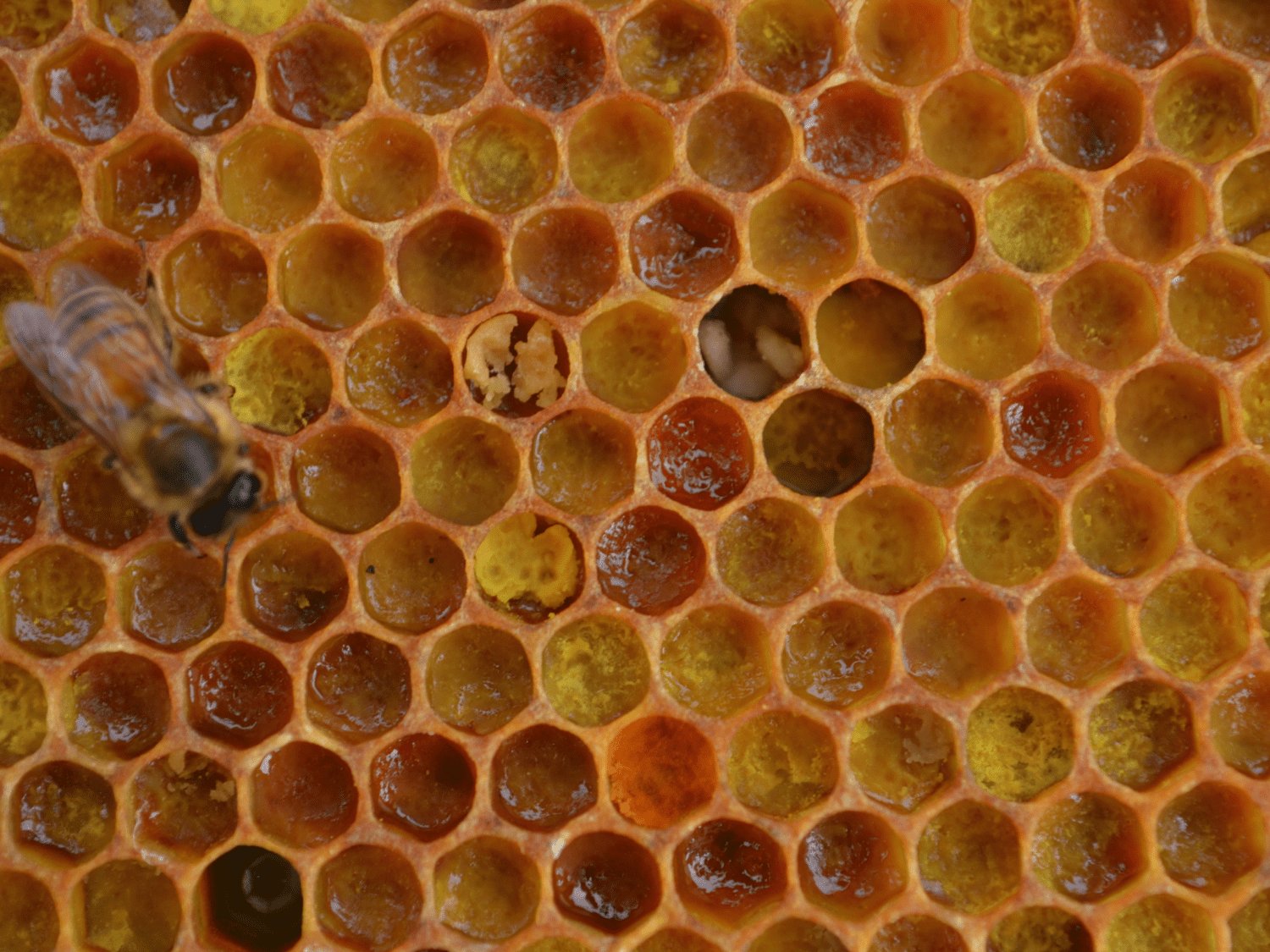
With warmer temperatures upon us, the honeybees are gearing up for reproduction. We are noticing our queen bees laying many more eggs, which means her worker bees are bringing in a significant amount of pollen. The pollen is deposited within the cells of the frame and then made into something called bee bread, also known as baby food for honey bees. 
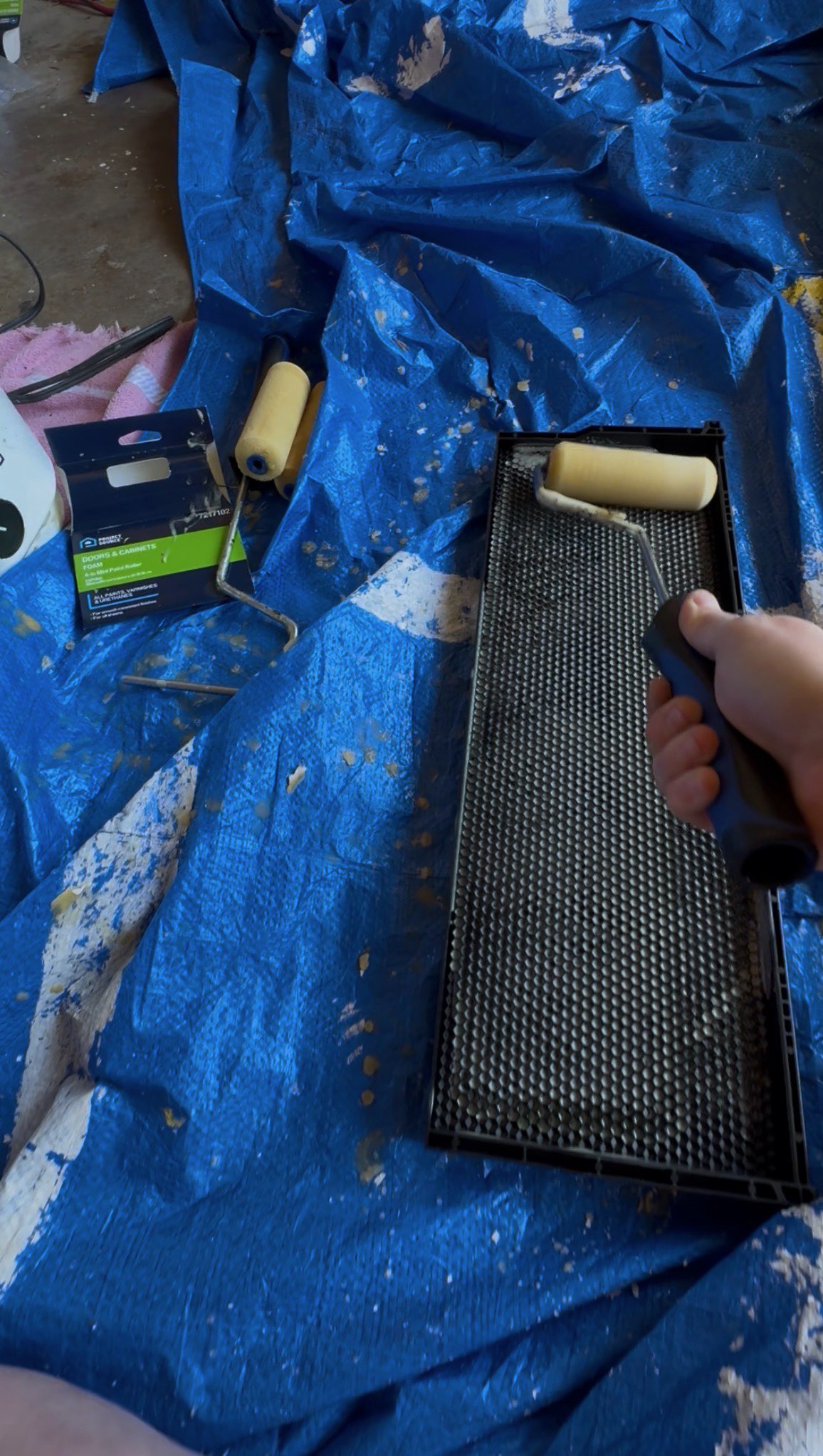
As we have been watching the plants takeoff, and some already in blossom, we are making our rounds to the bees to provide them with more space before their urge of swarming begins. On rainy days, we have been adding wax to brand new frames. This entails melting down wax and rolling it on to the frames. 
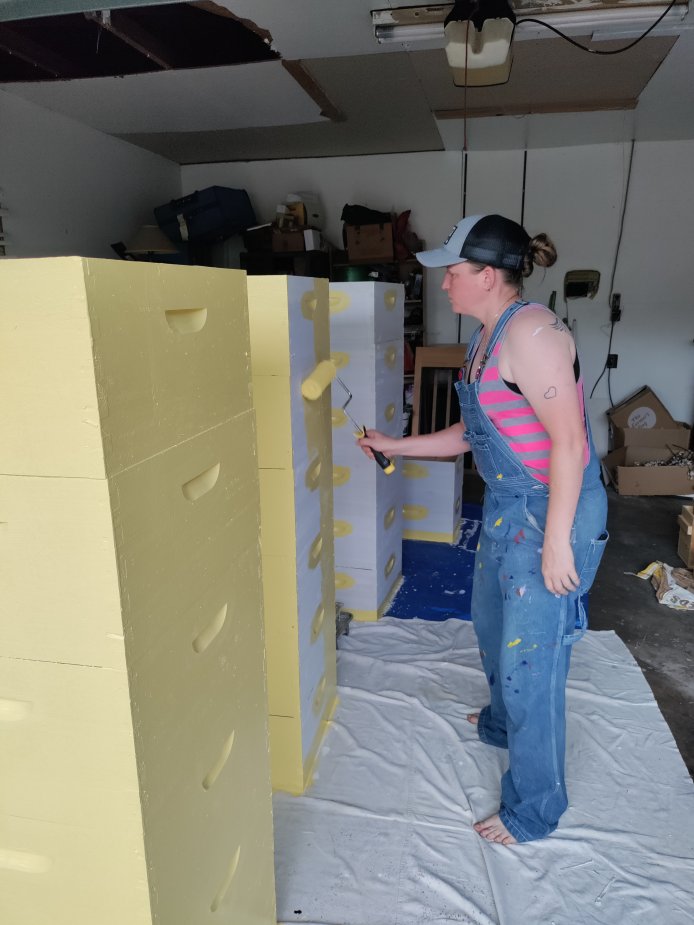
As we are providing more space for the bees, we are giving them the freshly waxed frames. In some case, we have been replacing older hive bodies with newly painted yellow hive bodies that we assembled, primed, and painted over the winter. We know that the honey bees will enjoy their upgraded accommodations! Welcome to spring, honey bees!
Unfortunately a part of beekeeping is also dealing with colony losses. We are doing last checks and counts to put together our action plan for replacing the hives that perished in the freeze – and will start getting the replacement bees in place during April and May.
Rex an I are excited to also point out that we are offering Introduction to Beekeeping classes – Class information and payment links are at: https://www.BohemianUtopia.com/classes/ Dates are March 14, April 4, and May 2.

Here’s a list of the beekeeping related podcasts I enjoy listening to. My current podcast player of choice on my Android phone – is called PodBean. You can find these podcasts on multiple outlets, though. iTunes, PodBean, CastPlayer, Spotify, etc…

Kevin Inglin of Beekeeper’s Corner – is probably the longest-running podcast I have listened to. Kevin has been producing this podcast since April of 2010!

Beekeeping Today Podcast

Two Bees in a Podcast

Honeybee Obscura

GardenFork Radio

January 2026 – Newsletter
(Laura Winters – Birds and the Bees Apiary)
Over the past month and a half, my business partner Rex and I have been busy preparing for the upcoming season.
We’ve assembled new hive equipment, including medium supers and deep boxes, then applied a coat of primer and paint to protect and preserve them.
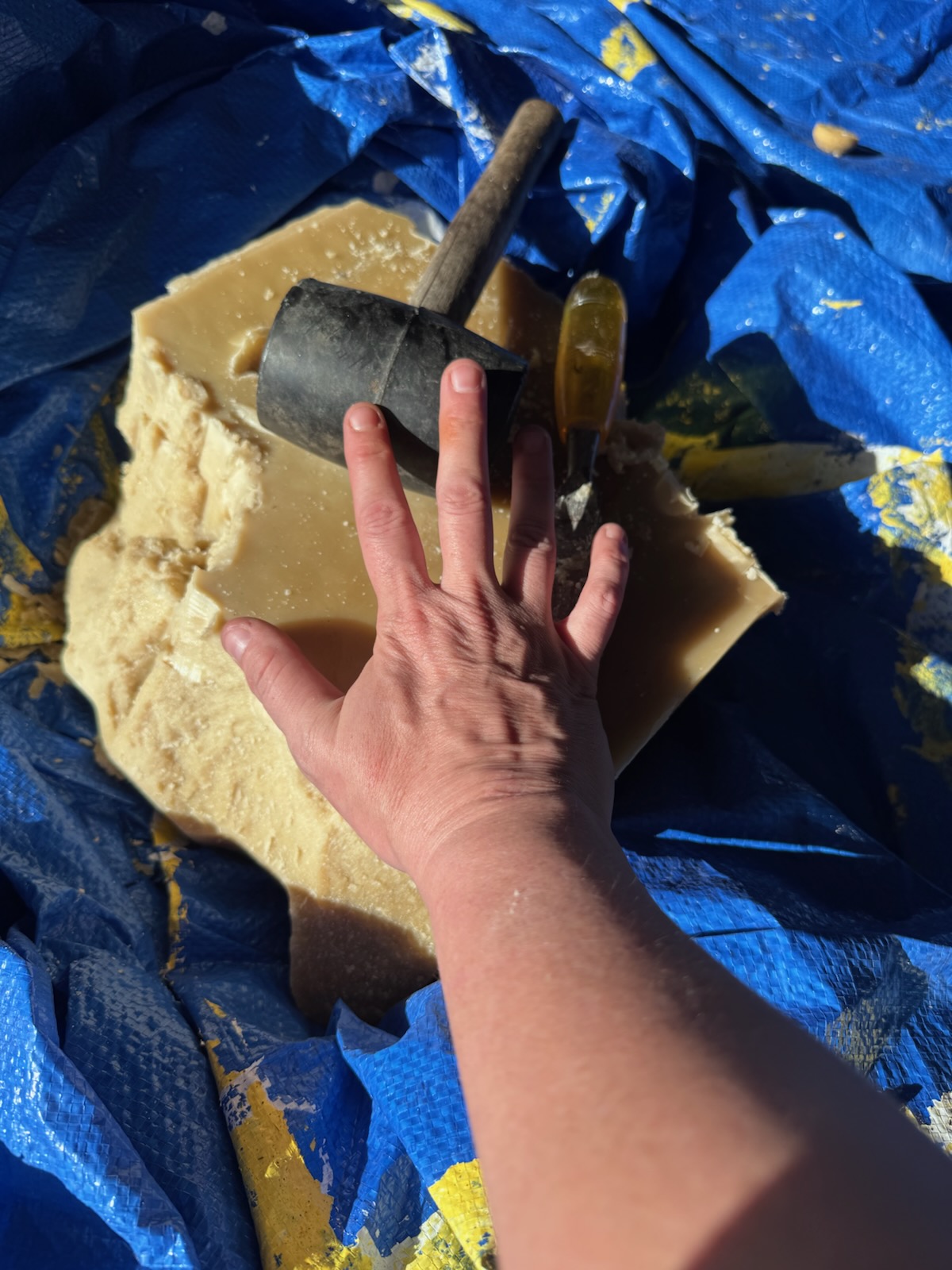
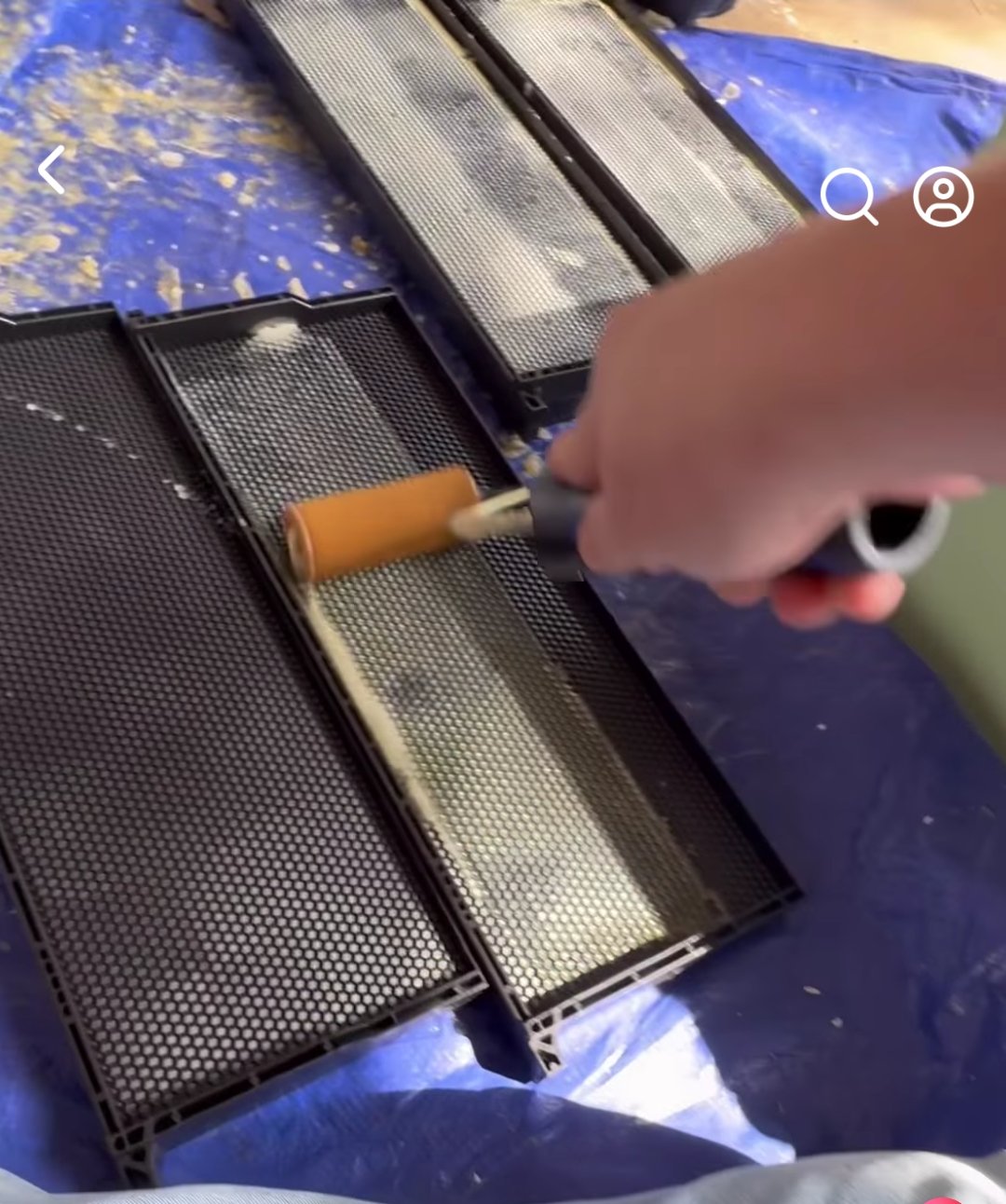
We’ve also ordered new frames and have been waxing the foundations by melting honeybee wax in a turkey roaster pan and rolling it onto each foundation with a sponge roller. This process helps the honeybees begin building on fresh frames right away.
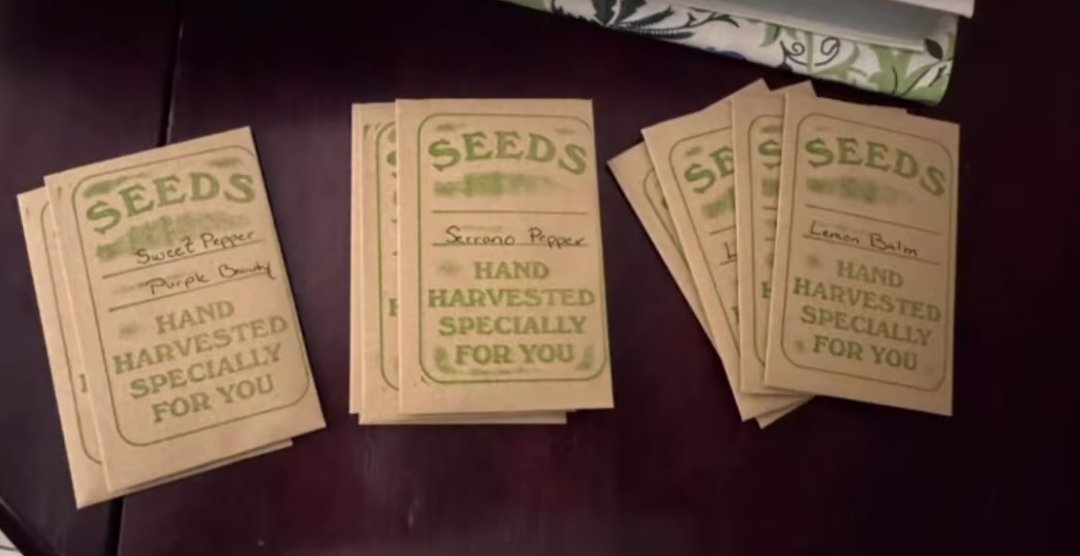
In addition, we’ve started vegetable seeds indoors and started certain tree varieties by cuttings and seed – both to support our honeybees and for personal use. Shown in the picture are Mexican Buckeye saplings grown from seed.
 
While making rounds to different property yards we’ve been checking on our colonies. We’ve continued using the mountain camp method, which involves placing a sheet of newspaper over the frames and adding about two pounds of sugar on top. This provides an emergency food source in case the bees begin using their fall honey stores. In some cases we’re noticing colonies are consuming all of the sugar within about a two week period. We will continue providing the honeybees with mountain camp method until we start noticing more flowers in bloom to provide a natural food source for them.
Sign up for our “Introduction to Beekeeping” classes. These are a 3-1/2 hour class – with classroom time where we cover the bees, gear, protective equipment, and more – then we spend time inspecting the hives. Click here for more info.
The Mexican Buckeye (Ungnadia speciosa) is a Texas-native, deciduous ornamental shrub or small tree (8–12 ft, up to 30 ft) with distinctive 3-lobed,, reddish-brown seed capsules containing poisonous, black, shiny seeds. It features fragrant spring whiteish-pink flowers, yellow fall color, and high drought tolerance, thriving in limestone soils, full sun, or partial shade.
It blooms profusely with fragrant pink blossoms in spring like a peach or redbud tree, and bees produce honey from the floral nectar.
If planting saplings into your fields or yard in North Texas where we have a heavy clay soil – amendments to the soil will be appreciated by your plant – to assist drainage. (They evolved in limestone soils – which tend to drain much better than our Blackland Prairie clay soils)
*****
Care:
Hardiness: Zones 7-9
Plant Form: Shrub or Tree
Plant Family: Sapindaceae
Lifespan: Perrenial
Exposure: Full sun / Partial Sun. Blooms are best in full sun
Season of Interest: Spring (Early / Mid / Late) ; Summer (Early / Mid / Late) ; Fall
Height: 8′ – 30′ (2m – 9m)
Spread: 12′ – 20′ (4m – 6m)
Maintenance: Low
Water Needs: Low (water deeply 1x-2x weekly til roots adjust to your soil)
Tolerance: Drought
Soil Type: Clay, Loam, Sand
Soil pH: Alkaline, Neutral
Soil Drainage: Well Drained
Characteristics: Fragrant, Showy Whiteish-Pink flowers,
Native: US Southwest, Texas, New Mexico, Oklahoma; Mexico
Attracts: Bees, Butterflies, Birds
*****
Seeds germinate and the radical and cotyledon emerge in approximately 3-7 days (My experience was closer to 3 days – with the seeds being in damp sand in a shallow container sitting on a 20-watt seed warming mat). After germination – at approximately 7 days – I placed each emerged seedling into a deep tree-pot for the root systems to develop fully.
   

From iNaturalist:
Ungnadia speciosa is a deciduous shrub or small tree (< 25 ft) that is often multi-trunked. The leaves (5–12 inches or 13–30 centimetres) are alternate and pinnately compound with 5 to 9 leaflets. The leaflets are long (3–5 inches or 7.6–12.7 centimetres), narrow, and pointed with slight serrations.
Fact Sources:
Ladybird Johnson Wildflower Center
Native Plant Society of Texas
iNaturalist
Gardenia.net
While state law codifies that acreages of 5-20 acres of open space can qualify for ag valuation with Honeybees, there are some caveats that give each county discretion to adjust other factors.
All:
Qualifying Acres are 5-acres to 20 acres.
Texas Tax Code: Subsection D states:
The term ( Agricultural Use) also includes the use of land to raise or keep bees for pollination or for the production of human food or other tangible products having a commercial value, provided that the land used is not less than 5 or more than 20 acres.
We HIGHLY recommend that each qualifying plot of land using bees for ag valuation – have some sort of food plot that can be documented to satisfy the above requirement. Photos of food plots, gardens, fruiting trees and plants, etc. will help your appraisal district documentation. Use this as additional documentation – as North Texas may or may not have a honey harvest – depending on available forage for the bees.
Be sure to check at least annually to see if your county appraisal district has changed any requirements
Collin County
Dallas County
- Dallas County Appraisal District
- Beekeeping qualifying References are highly unmentioned as of early 2025 website
- 5 Acres = 6 Hives. For each full 2.5 acres over 5, add 1 hive (12 hives total for 20 acres)
- If bees are off property for a time that disqualifies ag – in a city limit – all ag 5-year history must be re-started. Outside of a city limit, 5 of the last 7 years of documented history qualifies
- Time: Unlisted by appraisal district – presumed 12 months
- YouTube Video – Instructions for 1-D-1 Paperwork for Dallas County
Denton County
- Denton County Appraisal District
- 5 Acres = 6 Hives. For each full 2.5 acres over 5, add 1 hive (12 hives total for 20 acres)
- Annual Beekeeping Questionnaire Required to Appraisal District
- Time: Minimum of 7 months of the year
Hunt County
- Hunt County Appraisal District
- 5 Acres to 12 Acres = 6 Hives. For each full 2 acres over 12, add 1 hive (10 hives total for 20 acres)
- Time: Minimum of 7 months of the year
Kaufman County
Rockwall County
- Rockwall County Appraisal District
- 5 Acres = 6 Hives. For each full 2.5 acres over 5, add 1 hive (12 hives total for 20 acres)
- Landowner MUST be the owner of the honeybee livestock and equipment
- Time: FULL 12 months of the year
- TAIS Beekeeper listing documentation required (I maintain the listing for my clients – as TAIS charges $35/year for registering a beekeeper). A screenshot of the listing is provided to my clients.
Sources:
Texas Agriculture Code
Texas Tax Code
|
|